
The Honest Guide to Moving Companies: Full Service, Self Service, and Everything In Between
Because nobody warned you that moving your life to a new state could cost as much as a used car. We're warning you now.
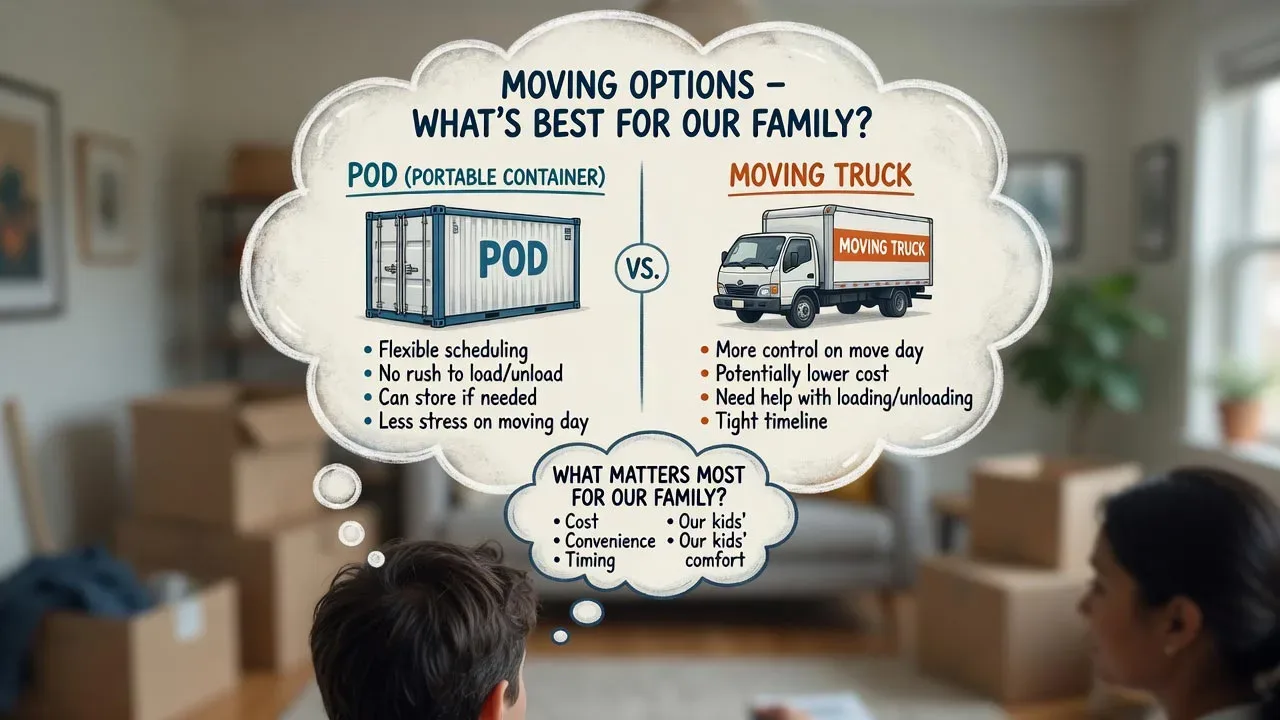
Moving is one of those activities that sounds manageable in your head approximately six weeks before it happens and then reveals its true character somewhere around 11pm the night before the truck shows up when you realize you still haven't packed the garage, the kitchen, or your own nervous system.
The good news is that there are professionals who do this for a living. The bad news is that they cost real money. The actually good news is that knowing what to budget for — in advance, with real numbers — is entirely possible, and the difference between being prepared and being surprised on move day is the difference between a transition and a trauma.
Here is everything you need to know about moving companies, broken down by how much help you actually want and what that help is going to cost you.
First: Understanding What You're Actually Choosing Between
There are essentially three ways to move your stuff from one state to another. They exist on a spectrum that runs from "someone else does literally everything while you supervise with a coffee" to "you rent a truck and discover muscles you forgot you had." Full service: professionals pack, load, drive, unload, and unpack. You point at things and make decisions. Self service / container: you pack everything yourself, a company drops off a container or truck, you fill it, they drive it, you unpack on the other end.
DIY truck rental: you do all of it. Everything. Every box, every appliance, every piece of furniture that you swore was lighter than it looks. You also drive the truck.
All three are legitimate options. The right one depends on your budget, your back, and how honestly you can assess your own willingness to wrap a couch in moving blankets at 7am on a Saturday.
Full Service Moving Companies: For When You Want Professionals
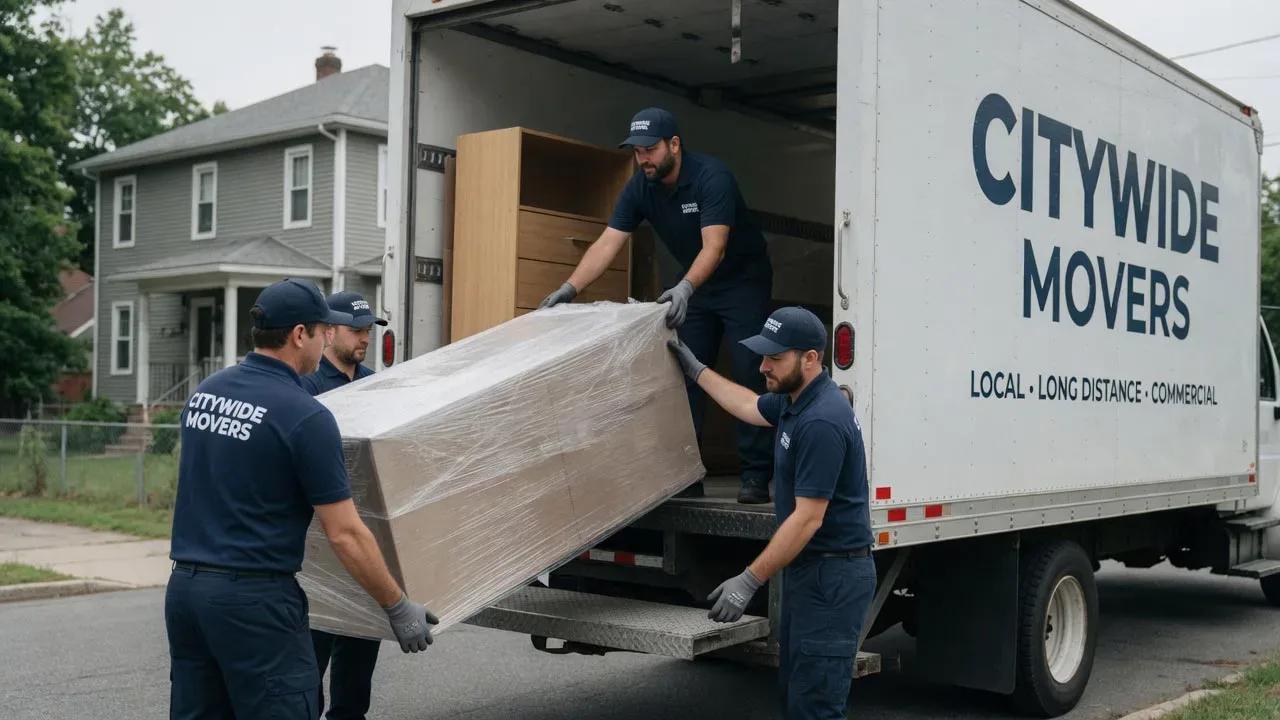
Full service moving is exactly what it sounds like. A team of people shows up, wraps your belongings with more care than you have ever given them, loads everything onto a truck, drives it to your new home, and delivers it. If you pay for the full package they will also pack everything before they leave and unpack it when they arrive. You are essentially hiring a small, very efficient army to handle a problem you don't want to handle yourself. The tradeoff is cost. Full service is the most expensive option by a significant margin. But for families with a lot of belongings, a tight timeline, or a cross-country move that doesn't have room for logistical complications, it is frequently worth every dollar.
JK Moving Services (jkmoving.com) consistently ranks at the top of national moving company ratings. Background-checked crews, real-time tracking on long-distance moves, and financing options through an in-house partnership make them worth getting a quote from. Pricing for a 960-mile interstate move came in around $6,277 for standard service and $9,061 for full service including packing.
United Van Lines (unitedvanlines.com) is the largest mover in the country and is particularly strong on interstate moves. They operate in all 50 states and offer international service to more than 150 countries. A 960-mile interstate move quoted at $8,469 standard and $10,820 full service — on the higher end, but the scale and reliability tend to justify it for complex moves.
Allied Van Lines (allied.com) offers a solid full-service option with the added bonus of their Allied Express container service for smaller or more budget-conscious moves. Their Allied VIP app lets you do a virtual in-home survey rather than waiting for an estimator to show up. Cross-country quotes ranged from $12,554 to $13,886 for standard service. They also guarantee delivery dates on their Express service and will pay you $75 per day if they're late — which is either reassuring or a fun experiment depending on how you look at it.
Mayflower Moving (mayflower.com) is a sister company to United Van Lines and has been in operation for nearly a century. If longevity is a comfort to you when trusting strangers with everything you own, Mayflower has been building that trust since before most of the interstates they drive on existed.
International Van Lines (internationalvanlines.com) is the pick for cross-country and international moves. They were the only company in multiple reviews to provide fully itemized estimates upfront without requiring a home survey — which, if you've ever tried to get a straight answer about moving costs, you understand is a remarkable quality.
What Full Service Actually Costs: Real Numbers
A standard interstate move of 960 miles costs between $6,000 and $9,000. For a full-service move including packing, the cost ranges from $9,000 to $11,000. Cross-country moves are more expensive, with rates typically ranging from $9,000 to $14,000 for standard service and up to $17,000 for full-service moves. Salary.com
For local moves under 50 miles: local movers typically charge between $80 and $100 an hour for two workers, with the average cost of a local move running $1,000 to $2,000. ERI
Additional costs to budget for:
Packing services: plan for an additional $350 to $600 for packing and unpacking depending on how many belongings you have, plus costs for supplies. Moving insurance: if you opt for higher-tier full-value protection, you'll typically pay between 1% and 5% of the insured goods' value. Specialty items like pianos, grandfather clocks, or artwork can add a few hundred to a few thousand dollars. Storage runs between $90 and $290 per month.
One thing worth knowing: none of the major moving companies provide binding, reliable quotes online — reputable movers need to consider total weight, object size, fragility, distance, and the layout of your house before giving you a quote. If a company gives you a firm number without seeing your stuff, that is a yellow flag waving at you from the future.
Self Service / Container Moving: The Middle Ground
Container moving is the compromise that actually works well for a lot of people. The company drops a container at your home. You pack it on your schedule, at your own pace, without anyone waiting for you to decide whether the blender is worth bringing. When you're done, they pick it up and deliver it to your new address. You unpack. Done. This model eliminates the rushed packing timeline of full service while still letting professionals handle the driving — which on a cross-country move is genuinely the part you do not want to take on yourself.
PODS (pods.com) is the most recognized name in container moving. They offer multiple container sizes, transparent pricing, and the option to keep the container at your destination as temporary storage while you figure out where everything goes — which for families in the middle of a move is more useful than it might sound. Pricing varies significantly by distance and container size but generally runs considerably less than full service.
U-Pack (upack.com) is a strong option for long-distance moves where you want to do the labor yourself but have professionals handle the transport. You pack, they drive, you unpack. Pricing is based on the space you actually use in the trailer rather than a flat fee, which can make budget planning more precise.
Zippy Shell (zippyshell.com) is worth knowing about if you're moving in or out of an urban area — their trailer-style units are designed to fit in street parking where standard pods can't go. Useful detail that most people don't discover until move day.
General container move pricing: expect to pay about $400 to $1,600 for a small local move and $2,000 to $5,000 or more for a long-distance move of similar size, depending on timing, services, and the company you choose.
DIY Truck Rental: For the Optimists
You rent a truck. You drive it. You do everything. You save the most money and spend the most of everything else. This is the right choice if you are moving a short distance, you have a small amount of stuff, you have friends willing to help in exchange for pizza, and you have a genuinely accurate sense of how long physical labor takes. The last one is where most people overestimate themselves.
Budget Truck Rental (budgettruck.com) consistently comes up as the most affordable truck rental option for local and regional moves. Rates vary by truck size, distance, and timing but are significantly lower than full or container service.
U-Haul (uhaul.com) is the most available option nationally with the largest fleet and the most locations. Availability and convenience are their primary advantages. Pricing is competitive for local moves, less so for one-way long distance.
Penske (pensketruckrental.com) is generally regarded as having newer trucks and better maintenance records than the alternatives. If you're driving a truck 1,500 miles and you'd prefer the engine not express opinions about that decision, Penske is worth the slight price premium.
If you want the DIY approach but want professionals to handle the heavy lifting while you drive, HireAHelper (hireahelper.com) connects you with local labor crews who load and unload on either end. You rent the truck. They do the carrying. You protect your lumbar spine. It's a reasonable compromise.
What to Budget — The Honest Summary
The range here is wide because the variables are wide. Distance, size of home, time of year, how much packing help you hire, and whether you have specialty items all move the number significantly.
Here is a realistic framework:
Local move (under 50 miles)
Full service: $1,000–$2,500
Container: $400–$1,600
DIY truck: $200–$600 plus your dignity if you drop the couch
Interstate move (under 500 miles)
Full service: $3,000–$6,500
Container: $1,500–$3,500
DIY truck: $500–$1,500 plus fuel and the hotel if you're driving overnight
Long distance (500–1,500 miles)
Full service: $6,000–$11,000
Container: $2,500–$5,000
DIY truck: $1,200–$3,000 plus fuel, hotels, and a genuine reckoning with your life choices around mile 900
Cross country (1,500+ miles)
Full service: $10,000–$17,000
Container: $4,000–$7,500
DIY truck: $2,000–$4,500 plus approximately one week of your life
Add packing services if you're going full service and don't want to do it yourself: $350–$600. Add full value protection insurance: 1%–2% of the value of your belongings. Add specialty item fees for pianos, pool tables, or anything else that makes the movers stop and look at each other: $400–$2,000 per item.
One universal rule: book early. It's advisable to book your moving company at least two months in advance. Early booking secures competitive rates and ensures availability, especially during peak moving seasons. Summer is the most expensive time to move. Weekends cost more than weekdays. The first and last days of the month — when leases typically turn over — are the hardest to get availability. If your schedule has any flexibility, Wednesday in October will cost you less than Saturday in July every single time.
One More Thing Before You Book
Before you pick up the phone, know what you're actually moving to. The cost of getting your stuff there is one budget line. The cost of your new life once it arrives — the property taxes, the cost of living difference, the school situation, the financial picture you're stepping into — is the rest of the spreadsheet. Knowing the full picture before you commit to a destination is exactly what Reloc8te was built for. Run your report, understand what you're walking into, and then hire the movers with confidence rather than optimism. The truck will show up either way. You might as well know where it's going.
Get relocation insights in your inbox
Double opt-in. No spam, unsubscribe anytime.
Related reading

Moving to a New State? Here's Everything You Think You Know That's Actually Wrong
A guide for families who've done the research, think they're ready, and are about to learn that "research" looks very different when someone actually organizes it for you.

How a Retired Kentucky Cop Found His Paradise in Florida (And How Reloc8te Saved Him From Moving Somewhere He Would Have Regretted)
A story about 28 years on the force, a 60% VA disability rating, two kids in college, one very patient wife, and a man who just wanted to sit on a porch without a radio clipped to his belt.

I Moved My Family 1,500 Miles, Saved $47K a Year, and Built a Tool Because I Had Too Many Browser Tabs Open
It's a Tuesday night in Murrieta, California. I've got somewhere north of 47 browser tabs open — and I'm not exaggerating, I counted — spread across school district rating sites, Zillow, Realtor.com, Niche.com, some random Reddit
Comments
Be the first to comment.