
I Moved My Family 1,500 Miles, Saved $47K a Year, and Built a Tool Because I Had Too Many Browser Tabs Open
It's a Tuesday night in Murrieta, California. I've got somewhere north of 47 browser tabs open — and I'm not exaggerating, I counted — spread across school district rating sites, Zillow, Realtor.com, Niche.com, some random Reddit
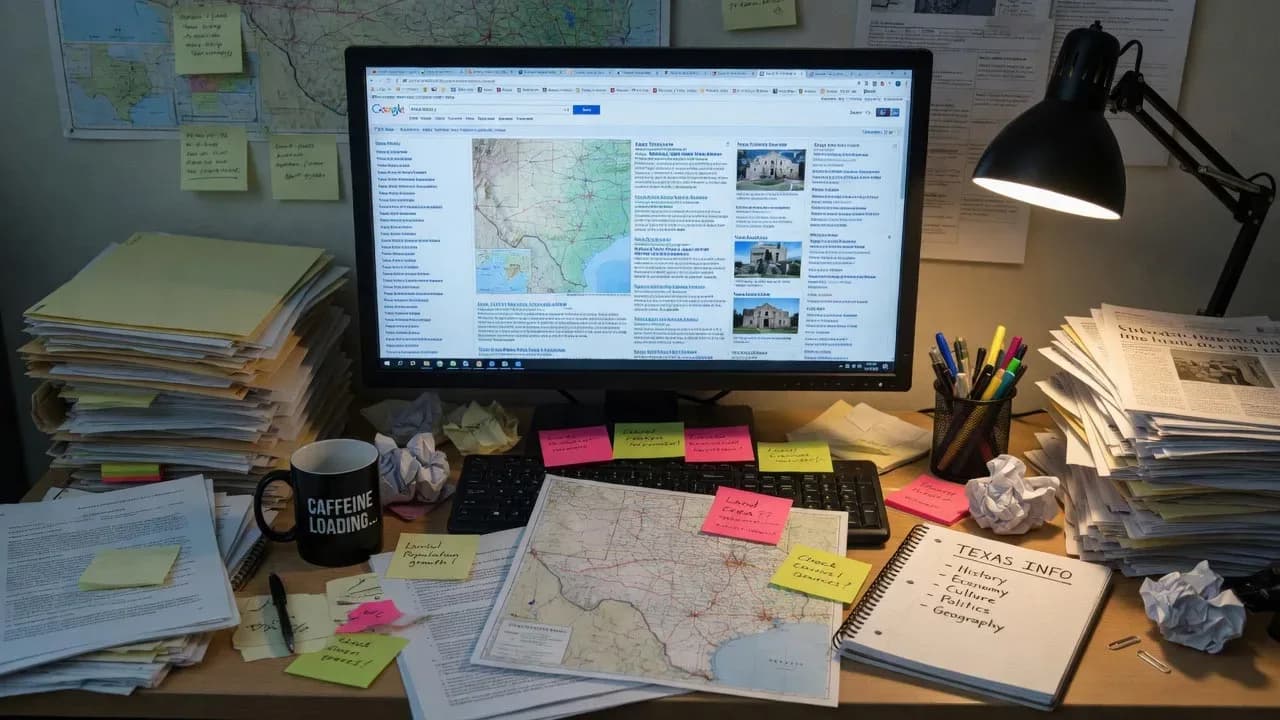
Let me paint you a picture.
It's 11:47pm on a Tuesday. I'm sitting at my desk looking like a man who has made several questionable life decisions. I've got 47 browser tabs open — and again, I counted, because at some point it stopped being a joke and became a cry for help — spread across Zillow, Realtor.com, three different school rating sites that all disagree with each other, a cost-of-living calculator that keeps telling me things I don't want to hear, a Reddit thread from 2019 that may or may not still be relevant, and at least four tabs I opened, completely forgot about, and am now too emotionally committed to close.
My wife walks past. Looks at the screen. Looks at me. Says absolutely nothing. She doesn't have to.
That look — veterans know this look, fathers know this look, anyone who has ever confidently started a home improvement project they had no business starting knows this look — that look says: baby, you need help. She was right. But instead of getting help, I built a company. Which, honestly, tracks.
The Setup: My Employer, a Reasonable Request, and My Completely Unreasonable Lifestyle Demands
So here's how this whole thing started. My employer came to me with an opportunity that involved being closer to an office. Totally reasonable. Normal corporate thing. Nothing sinister.
Except I didn't want to live near the office.
I have four kids. I'm a veteran. I've lived in environments where personal space was measured in inches and 'quiet time' was a concept discussed only in hushed, reverent tones by people who hadn't slept properly in months. I came out of that experience with a very clear vision of what I wanted my civilian life to look like: space, a yard, a smaller town, a community where people actually know each other, schools worth a damn, and enough square footage that when my kids are being loud I have the option of pretending I can't hear them.
What I did not want was to live in a city. Any city. I have made my peace with cities. I respect cities. I simply do not want to live in one.
So when my employer, bless them, asked whether I'd be comfortable driving about an hour to the office, I almost laughed out loud. "An hour?" I said. "Sir, I am currently in Southern California. The office is 60 miles away. On a good day — a genuinely good day, the kind where you feel like the universe is rooting for you — that commute is two hours. On a normal day it's closer to three. I once sat in traffic so long I started questioning my life choices, my career trajectory, and whether I had correctly identified my car's purpose as a vehicle rather than a very expensive waiting room. An hour commute is not a sacrifice. An hour commute is a spa day." We moved on pretty quickly after that.
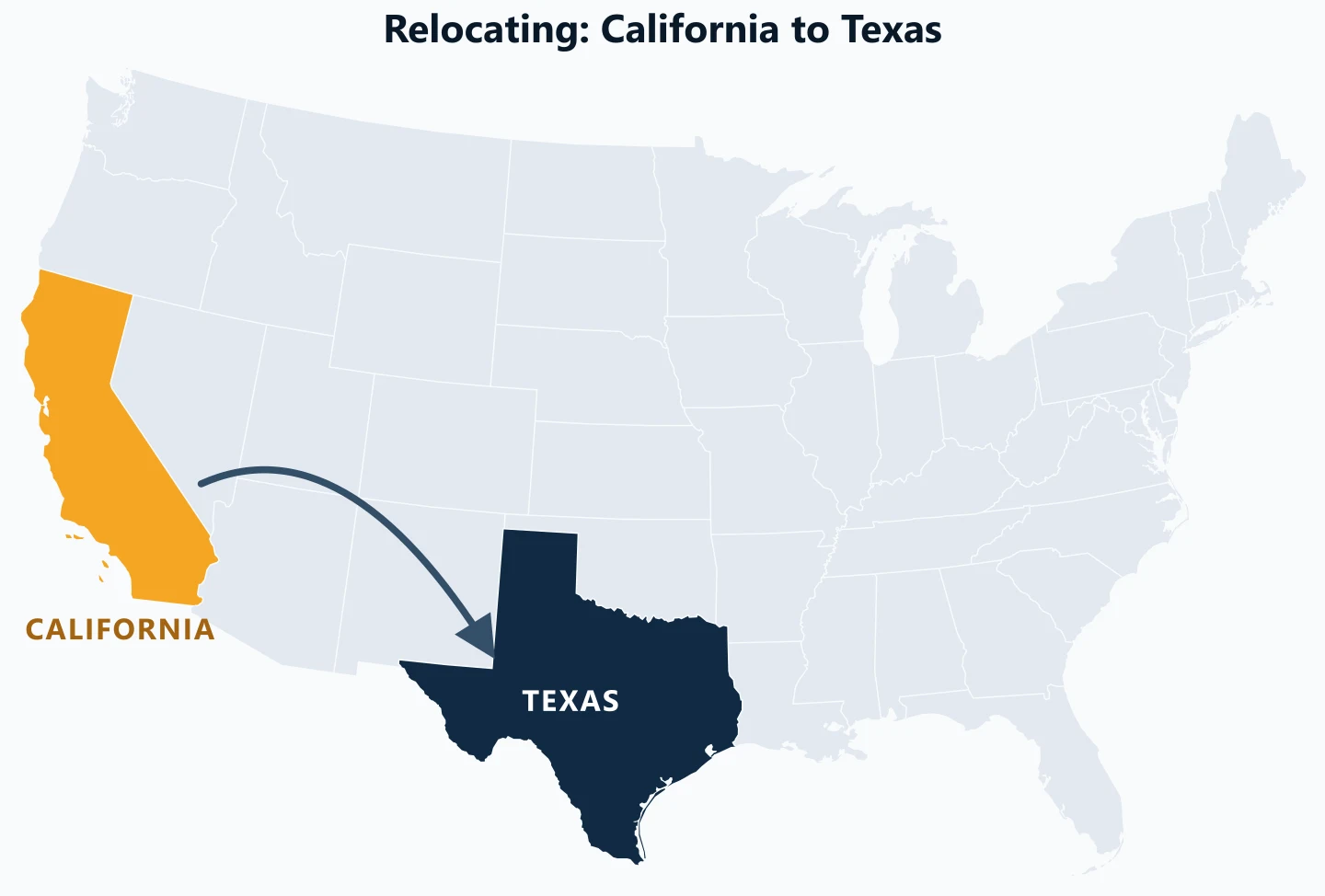
California Math vs. Texas Math: A Horror Story With a Happy Ending
Here's the part of the story where I need to talk about money. Not in a braggy way. In a "I genuinely did not understand how badly I was getting worked over until I ran the numbers" kind of way. Living in California is a financial experience best described as having a hole in your pocket, but the hole is shaped like a state government, and every time you try to patch it someone reminds you about the weather.
I'm a veteran. U.S. Army Infantry. 10th Mountain Division. Deployed to Afghanistan. Came back with a Purple Heart, some hardware, and an extremely well-calibrated ability to assess when a situation is unsustainable. California was unsustainable. I just hadn't done the math loudly enough yet.
Then I looked at Texas.
Texas has a property tax exemption for veterans with a qualifying disability rating. A real one. A significant one. The kind that, when you apply it to a home in a place like Montgomery — a real home, not whatever California calls a home, which is often a 1,400 square foot box with 'character' and a listing photo that was taken with a wide-angle lens and optimism — the savings are genuinely staggering. Stack that exemption on top of zero state income tax, a cost of living that doesn't make you want to lie down in a parking lot, and the general economic reality of a state that isn't actively trying to extract money from your wallet through sheer ambient pressure — and I was looking at nearly $47,000 in annual savings.
I'll give you a second with that number.
Forty-seven thousand dollars. Per year. Every year. Just sitting there, waiting for me to stop renting California its own money back with interest.
Now — yes. Interest rates are not what they were in 2020. I'm aware. I have a mortgage and a blood pressure reading that reflects this awareness. But here's the thing about saving $47,000 a year: a higher mortgage payment stops being a problem and starts being a rounding error. We took those savings and rolled them into a 3,450 square foot home with five bedrooms, four bathrooms, a pool, a spa, and a golf course literally in the backyard.
The Great School Research Project, or: How I Developed a Nervous Tic
People without kids, feel free to skip this section. People with kids — I see you. I know your pain. Pour something appropriate and keep reading.
Researching schools in a market you've never lived in is not a task. It is a lifestyle. It becomes your personality. You start conversations at parties — if you still go to parties, which you probably don't because you're too busy researching schools — with phrases like "well, according to Niche.com's 2024 ranking methodology..." and watch people slowly back away.
My kids are competitive. Softball, soccer, baseball, golf — they don't dabble, they commit. Which means I couldn't just find a school. I needed schools with strong athletic programs, real academic ratings, coaches who actually coach, and a community that shows up. Not politely shows up. Shows up shows up. The kind of Friday night energy where the whole town comes out and you can feel it. I also had to account for the fact that every rating site on the internet disagrees with every other rating site on the internet. Niche says one thing. GreatSchools says another. Some random blog post from 2021 says a third thing and is clearly written by someone with an axe to grind about a specific school board decision I'm not qualified to adjudicate.
I made a spreadsheet. The spreadsheet had sub-tabs. The sub-tabs had color coding. The color coding had a legend. At some point I printed the legend and then lost the printout and that was probably a sign. Montgomery ISD — Oak Hills Junior High and Lake Creek High School, both A-rated — was the answer. But getting to that answer required more research hours than I spent on some college courses, and I went to college.
And then there was church.
Finding a church in a new city is its own entire research vertical. You're not just looking for a building. You're looking for a community, a culture, a fit for your whole family across multiple ages and personalities and levels of willingness to participate in potluck dinners. This had its own tabs. Obviously. Everything had its own tabs. The tabs were multiplying.

47 Tabs and a Spiritual Crisis
Let me tell you what the actual problem was. It wasn't that the information didn't exist. It was that the information existed everywhere, in seventeen different formats, updated at seventeen different intervals, and none of it talked to any of the rest of it.
I had Zillow favorites I couldn't remember favoriting. I had a note on my phone that just said "check the thing" with no additional context — past me left future me genuinely nothing to work with. I had a Google Sheet that made complete sense at 1am and was archaeologically indecipherable by morning. I had school ratings in one tab, crime stats in another, commute time estimates in a third, veteran benefits by state in a fourth, and absolutely no way to synthesize any of it into a single coherent picture.
Here's what I actually needed. I needed a report. One document, structured and comprehensive, that took all the things I cared about — home values, school performance, cost of living, commute viability, veteran benefits, community character, proximity to a Costco, whatever — and organized it into something I could sit down with, think through, refine, and then hand to a real estate agent and say: here. This is exactly what I want. Find me this.
Instead I handed my agent a vibe and some screenshots. To her credit, she did great. But she absolutely did not need to work that hard, and neither did I, and nobody should have to.
So I Did What Any Rational Person Would Do and Started a Company
My co-founder Taylor is my best friend. He is also, crucially, an actual technical builder, which I am not. I am a marketer and a strategist and a man with strong opinions and a willingness to be annoying about them until something gets built. We are, in other words, perfectly matched.
I came to Taylor with the pitch: "I just went through one of the most stressful research experiences of my life trying to decide where to move my family, I had to synthesize about 200 hours of fragmented data from 47 tabs to make a decision I still wasn't fully confident in, and there is no tool that does what I needed. Let's build it."
Taylor, to his eternal credit, said yes instead of "that sounds like a you problem."
We built Reloc8te. An AI-powered relocation intelligence platform that generates comprehensive, structured reports covering everything that actually matters when you're moving your life somewhere new. Cost of living comparisons. Home value trends. School district ratings. Commute analysis. Veteran benefits by state — because I promise you, most veterans have no idea what they're actually entitled to, and that information alone can be worth tens of thousands of dollars a year. Community character. The whole picture, in one place, in a format you can actually use.
The vision was simple: give people the tool I didn't have. Let them walk into the biggest decision of their lives with real intelligence instead of browser tab chaos. Let them hand their agent something useful. Let them have a conversation with their spouse that's grounded in data instead of "well, I think I saw something about this on Reddit." Let them close the tabs.
Where We Landed
Montgomery, Texas. Pool. Spa. Golf course backyard. More square footage than I knew what to do with, which turned out to be exactly the right amount of square footage. A school district that's earned its ratings. A community worth being part of. A commute, on the days I make it, that I do not think about before 9am. And about $47,000 a year that used to belong to California and now belongs to my family. This move changed our trajectory. Not just financially — though the finances are genuinely ridiculous in the best way — but in the way that matters more. We're somewhere we chose on purpose. Somewhere we researched, evaluated, decided on, and showed up to with full commitment. That's a different feeling than just landing somewhere because it was adjacent to a job offer.
That feeling is what Reloc8te is built to give people. The clarity. The confidence. The data that lets you make a real decision instead of an anxious one. And, not for nothing: the ability to close the tabs.
All 47 of them.
Get relocation insights in your inbox
Double opt-in. No spam, unsubscribe anytime.
Related reading

Moving to a New State? Here's Everything You Think You Know That's Actually Wrong
A guide for families who've done the research, think they're ready, and are about to learn that "research" looks very different when someone actually organizes it for you.
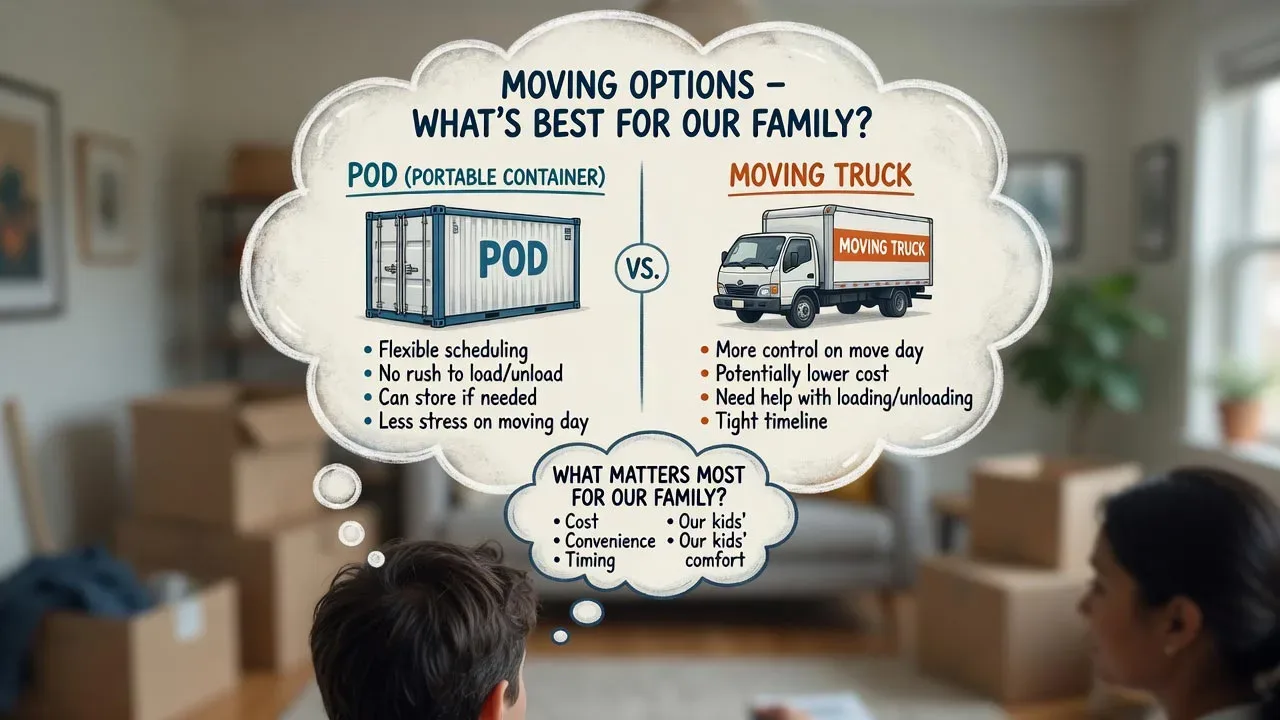
The Honest Guide to Moving Companies: Full Service, Self Service, and Everything In Between
Because nobody warned you that moving your life to a new state could cost as much as a used car. We're warning you now.

How a Retired Kentucky Cop Found His Paradise in Florida (And How Reloc8te Saved Him From Moving Somewhere He Would Have Regretted)
A story about 28 years on the force, a 60% VA disability rating, two kids in college, one very patient wife, and a man who just wanted to sit on a porch without a radio clipped to his belt.
Comments
Be the first to comment.