
How a Retired Kentucky Cop Found His Paradise in Florida (And How Reloc8te Saved Him From Moving Somewhere He Would Have Regretted)
A story about 28 years on the force, a 60% VA disability rating, two kids in college, one very patient wife, and a man who just wanted to sit on a porch without a radio clipped to his belt.
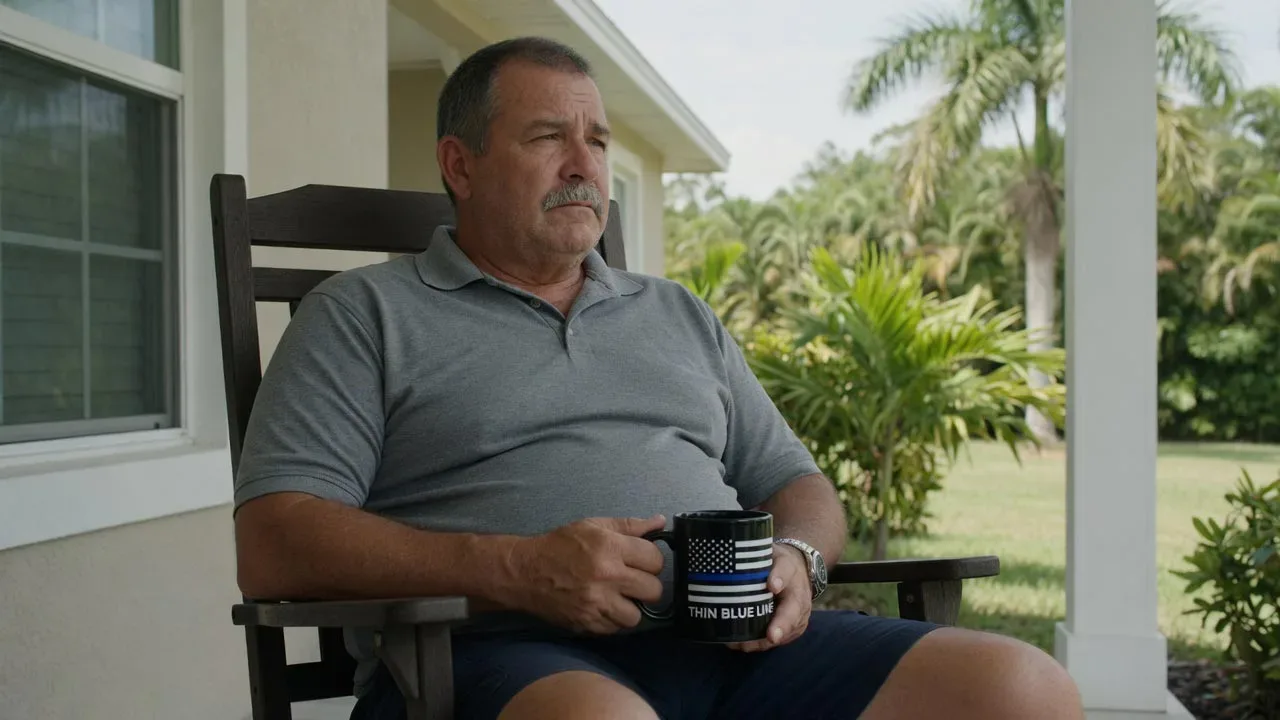
Meet Gary Hutchins. Gary spent 28 years as a police officer in Bowling Green, Kentucky. Before that, he did four years in the Army, came home, got his degree, joined the department, and spent nearly three decades doing the kind of work that ages a man in ways that don't show up on a physical. He responded to things. He wrote reports about those things. He went home and tried not to think about those things. He repeated this process approximately ten thousand times.
At 58, Gary put in his papers. His two kids — Tyler, 20, and Madison, 19 — were both in college and no longer required daily management. His wife, Donna, had been waiting patiently for roughly a decade for Gary to stop working and start living. The house in Bowling Green was paid off. The pension was locked in. His VA disability rating was sitting at 60%, which came with compensation that, combined with his law enforcement pension, meant Gary Hutchins was not going to starve. He had one remaining problem. He had absolutely no idea where to go.
The Research Phase, Which Was Not Going Well
Gary is a methodical man. Twenty-eight years of police work will do that to you. He approached the relocation research the same way he approached everything — systematically, thoroughly, and with a growing suspicion that the process was designed to frustrate him.
"I went on about twelve different websites," Gary said. "Every one of them told me something different. One said Florida was the best state for retirees. Another one said the property taxes were brutal depending on where you were. One said cost of living was low. Another one said no, it depends on which county. I felt like I was interviewing witnesses who all saw the same accident and none of them agreed on anything."
Donna, who had been watching Gary take notes at the kitchen table for three weeks straight, eventually suggested he try Reloc8te.
Gary, who had spent 28 years being skeptical of things by professional requirement, tried it anyway.
"I put in Bowling Green, I put in three places in Florida I was looking at — Sarasota, Ocala, and the Port Charlotte area. I put in my pension income, my VA compensation, our situation. And it came back with a report that made me sit back in my chair and just look at it for a minute."
Donna says he didn't say anything for almost four minutes. For Gary Hutchins, who has an opinion about everything, four minutes of silence is a diagnostic event.
"The report showed me the full financial picture of what Kentucky versus Florida meant for my situation," Gary said. "Kentucky has a state income tax. Florida has zero. My pension, my VA compensation, all of it. In Kentucky I was paying state income tax on my pension income. In Florida I would pay exactly nothing. The report calculated what that was worth to me specifically. Not to some average retiree. To me. With my numbers."
What the Report Said That Stopped Him Cold
Gary is 60% service-connected disabled. He knew this. He had the paperwork. What he did not know — or more accurately, what nobody had organized clearly enough for him to act on — was what that rating meant in terms of property taxes in Florida specifically.
Florida offers veterans with a service-connected disability rating of 10% or more a $5,000 reduction in the assessed value of their home for property tax purposes. Veterans who are totally and permanently disabled receive a full property tax exemption. Gary's 60% rating qualified him for the $5,000 assessed value reduction immediately. But that was not the number that got him.
"The report showed me the full financial picture of what Kentucky versus Florida meant for my situation," Gary said. "Kentucky has a state income tax. Florida has zero. My pension, my VA compensation, all of it. In Kentucky I was paying state income tax on my pension income. In Florida I would pay exactly nothing. The report calculated what that was worth to me specifically. Not to some average retiree. To me. With my numbers."
He paused.
"I had been leaving a meaningful amount of money on the table every single year by staying somewhere that was taxing income I had already earned by doing a job nobody else wanted to do. That bothered me."
Donna: "He used different words than that."
Gary: "I used different words than that."
Why Kentucky Was Comfortable But Not the Answer
To be fair to Kentucky — and Gary is fair to Kentucky, because he spent his career serving it — Bowling Green is a genuinely good place to live. Reasonable cost of living, good people, a community he knew and that knew him.
But Gary had reached a particular stage of life that he describes with characteristic precision.
"I spent 28 years in Kentucky winters dealing with weather-related accidents, ice, and what I can only describe as the annual experiment in whether Kentuckians will choose to drive in conditions they clearly should not drive in. The answer, every year, was yes. They will choose to drive. And then I have to show up."
He also had a specific vision for retirement that did not involve a heavy coat.
"I wanted a boat. I wanted to fish. I wanted to sit outside in February without engineering a solution to the cold. I wanted a porch that I actually used rather than a porch I looked at from inside the house. These were my requirements."
Donna's requirements were less meteorologically specific but equally firm.
"I told Gary I wanted somewhere we could actually walk outside year round, somewhere near water, with a community that had things going on. Not a retirement community where everyone is eighty. Just somewhere alive."
The Reloc8te report compared all three Florida markets they were considering across every variable that mattered to them. Schools came up not for the kids — Tyler and Madison were both comfortably established in college — but because Gary and Donna were thinking about resale value and the long-term neighborhood quality that school district reputation affects. Crime data came up because Gary spent 28 years reading crime data and old habits do not simply retire because you did.
"The crime section of the report was interesting to me for reasons that were probably different from most people," Gary said. "I know how to read crime statistics. I know what the numbers actually mean versus what they look like on the surface. The report gave me enough context to make my own assessment rather than just a score that didn't tell me anything useful. That mattered."
The Decision: Port Charlotte, Florida
Port Charlotte was not the flashiest option Gary was considering. Sarasota had the culture. Ocala had the horse country appeal. But Port Charlotte, sitting along Charlotte Harbor on the southwest Florida Gulf Coast, did something the other two didn't. It made sense financially while also delivering the water access, the year-round outdoor life, and the community feel that Gary and Donna were looking for. The cost of housing was meaningfully lower than Sarasota. The Charlotte Harbor fishing was, by Gary's research standards, exceptional. The pace of life was what he described as 'appropriately calm for a man who has had enough excitement.' "I found a place with a dock," Gary said, as if this explained everything. In Gary's world, it did.
They closed on a home in Port Charlotte in the spring. Three bedrooms — one for them, one designated as the guest room for Tyler and Madison when they come home from school, one that Gary calls his office and Donna calls the room with all the fishing equipment. They have a boat. It is not a large boat. Gary has described it as "appropriately sized for a retired police officer who does not need to prove anything to anyone."
He uses it three to four times a week.
"I went fishing on a Tuesday at 10am," he said. "I want you to understand what that sentence means. A Tuesday. At 10am. I was on the water on a Tuesday morning and nobody called me about anything." He got quiet for a moment.
"That's the dream. That's actually the dream right there."
What the Move Actually Cost and What It Saves
Gary is a numbers person. Twenty-eight years of budget reports, overtime tracking, and departmental accounting will do that. He ran the full financial picture with the help of the Reloc8te report before making any decisions. The Kentucky house sold for a comfortable number. The Port Charlotte home came in below what they sold for, which meant they bought their retirement home without a mortgage. For Gary, a man who has spent his career understanding how financial stress operates in people's lives, owning his home outright was not a small thing.
"No mortgage. No state income tax. VA compensation that goes further in Florida than it did in Kentucky. The disability reduction on the property tax assessment. Add it up and we are in a significantly better financial position than we would have been if we had just stayed out of inertia."
He paused.
"Inertia is the enemy of good decision-making. I have seen it destroy people. You stay somewhere because it's familiar and you never actually ask whether it's right. The report forced me to ask that question with real numbers." The report also showed him what each Florida county's cost of living looked like against his actual income — not a median household comparison, but a calculation built around his pension, his VA compensation, and their actual spending patterns. The difference between Sarasota and Port Charlotte in terms of monthly cost of living was enough to matter to a man who had just become permanently financially responsible for himself rather than an institution.
"I am not cheap," Gary said carefully. "I am precise. There is a difference." Donna laughed. She has heard this before.
A Note on the Kids
Tyler and Madison are in college. They did not have strong opinions about where their parents moved, as is traditional for college students who are operating under the reasonable assumption that the world largely exists to accommodate their schedules. Tyler came to visit in January. He arrived from a campus where it was twenty-two degrees and spent four days on the boat with Gary. He has since mentioned Florida unprompted in three separate phone calls.
Madison came in March during spring break. She brought a friend. Gary made them help move dock lines because 'everyone contributes.' Madison's friend has also since mentioned Florida unprompted, which Gary counts as a net positive for the region. "I told them both — do your research before you decide where you end up," Gary said. "Don't just go somewhere because it's convenient or because that's where your first job was. Actually figure out what the financial picture looks like, what the lifestyle picture looks like, what you're walking into. Don't find out after the fact." He sounded, in that moment, less like a retiree with a fishing boat and more like a man who spent 28 years watching people make decisions without adequate information.
Old habits.
What Gary Says to Anyone Considering a Move
"Run the report before you go look at houses. I cannot tell you how many people I know who picked a place because they visited it once in nice weather and it felt good. That's not how you make a decision about where you're going to live for the rest of your life. You need the full picture — the taxes, the cost of living, the healthcare access, the VA situation if it applies to you. What you're actually going to save or spend. Not a guess. Real numbers."
He leaned back.
"I looked at three cities. The report showed me which one made sense for my specific situation. Not generically. Specifically. For me and Donna and what we actually need at this stage of life. That's worth more than any amount of Googling I was going to do on my own. I was going to do a lot of Googling," he added. "I am a very thorough Googler." Donna nodded. She has witnessed the Googling.
The Bottom Line From Gary Hutchins, Retired
Gary Hutchins did 28 years of work that most people would not do and came out the other side with a pension, a VA rating, a wife who somehow still finds him tolerable, two kids in college, and a boat on Charlotte Harbor. He sits on his porch in February in a short-sleeved shirt. He goes fishing on Tuesday mornings. He has not heard a police radio in eight months and describes this as "an adjustment that took about forty-eight hours."
He used Reloc8te to make sure the move made financial sense before he made it. It did. He made it. He has not regretted it for a single day.
"Life," Gary said, watching the water from his dock on a Thursday afternoon when approximately nothing was happening and that was exactly correct, "is good." His fishing rod moved. He reached for it immediately with the same reflexes that once reached for a radio.
Some things don't change. Everything else did.
Get relocation insights in your inbox
Double opt-in. No spam, unsubscribe anytime.
Related reading

Moving to a New State? Here's Everything You Think You Know That's Actually Wrong
A guide for families who've done the research, think they're ready, and are about to learn that "research" looks very different when someone actually organizes it for you.
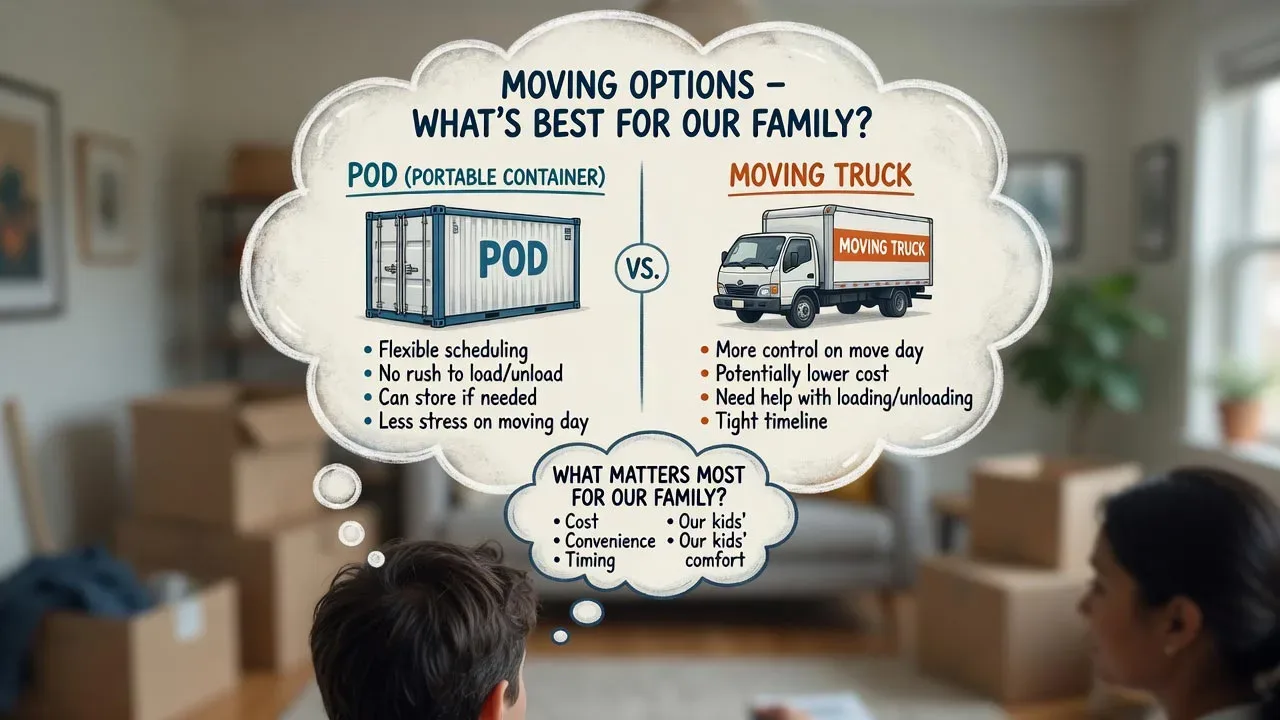
The Honest Guide to Moving Companies: Full Service, Self Service, and Everything In Between
Because nobody warned you that moving your life to a new state could cost as much as a used car. We're warning you now.
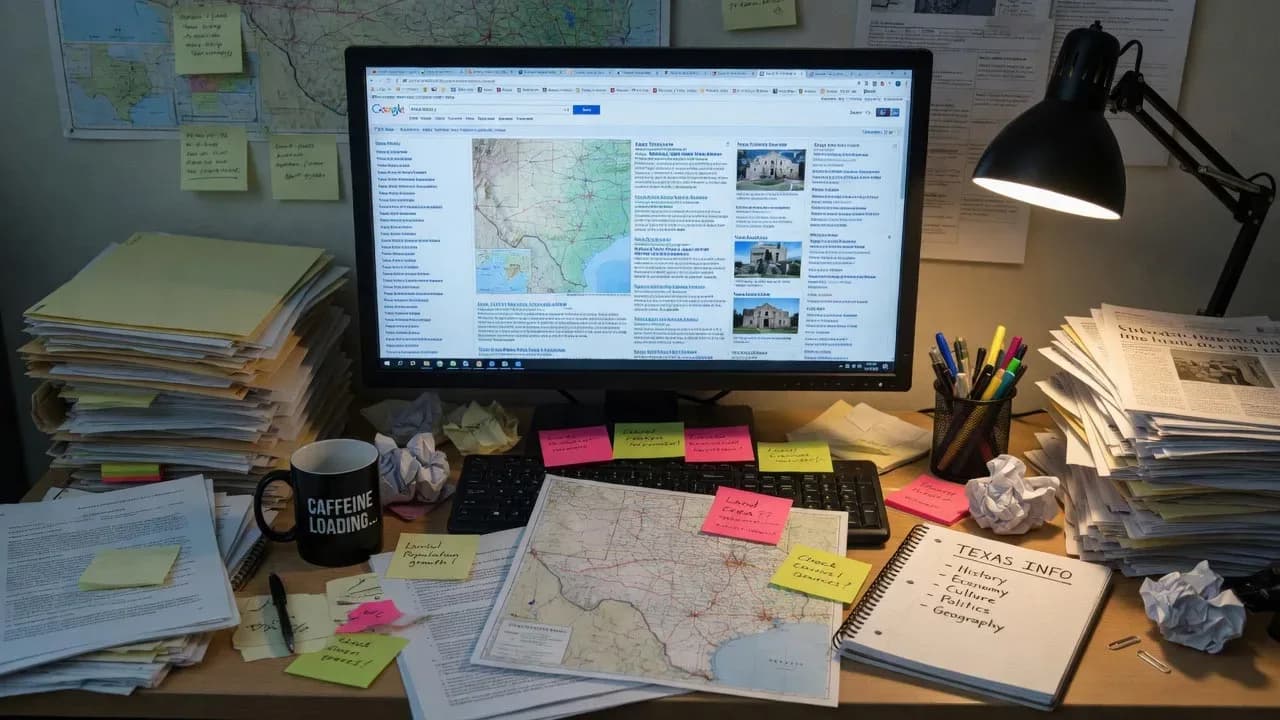
I Moved My Family 1,500 Miles, Saved $47K a Year, and Built a Tool Because I Had Too Many Browser Tabs Open
It's a Tuesday night in Murrieta, California. I've got somewhere north of 47 browser tabs open — and I'm not exaggerating, I counted — spread across school district rating sites, Zillow, Realtor.com, Niche.com, some random Reddit
Comments
Be the first to comment.